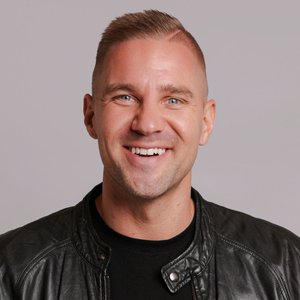
I became a personal trainer at 39. Here's what it taught me about making progress in life and in business.
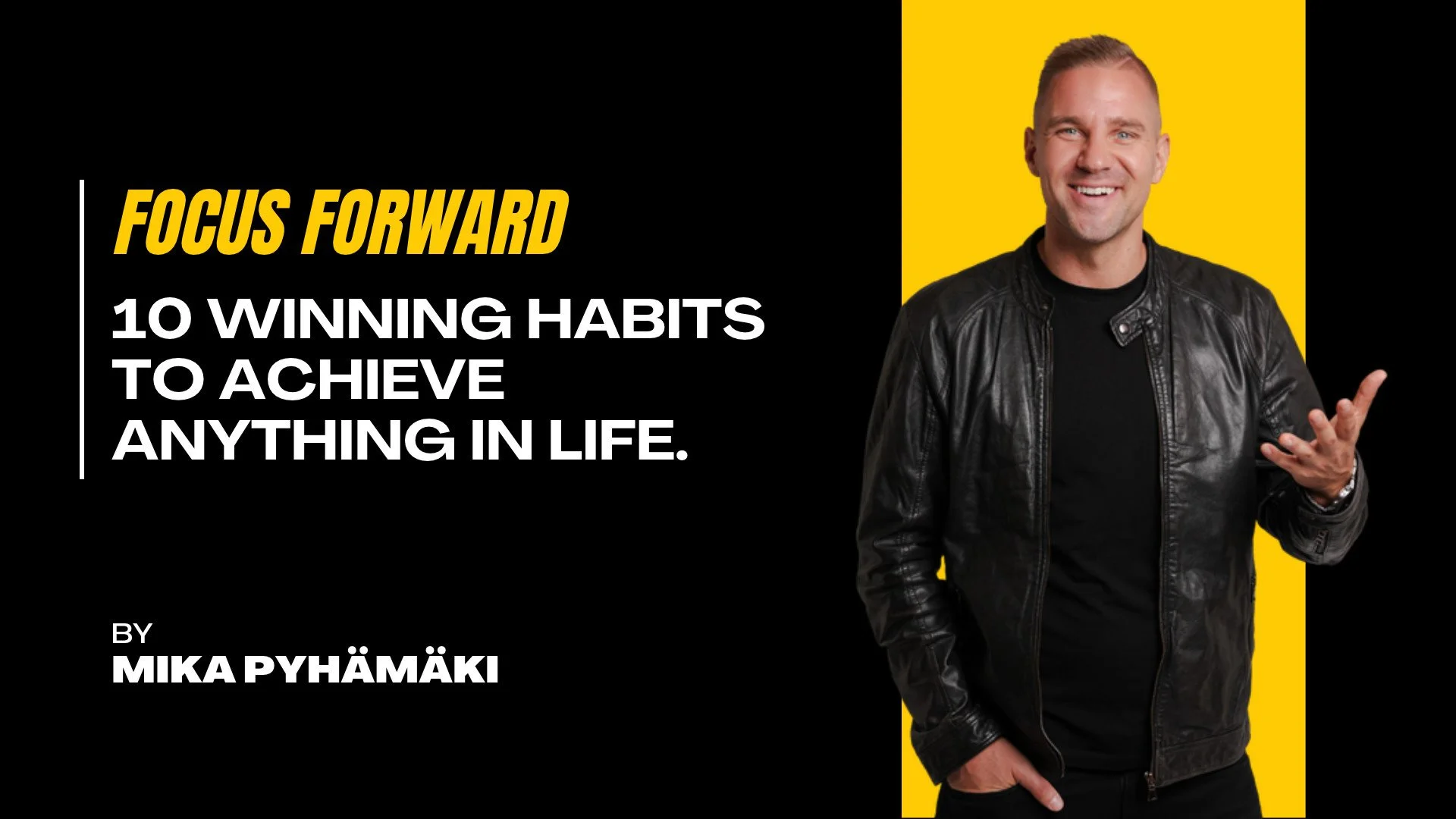
Early on a dark November morning in Helsinki, I’m sweating under a barbell. A few hours later, I’m at a tech startup event, surrounded by founders pitching the future.
That was my Slush week. Two very different venues, but in both of them the people had one thing in common: they were with people who believed in themselves.
Today, I want to share what I’ve learned, and help you pick a habit that moves you forward before the New Year. But first, let’s look at why so many people get stuck.
What is the real problem?
When founders tell me they feel stuck, the problem usually falls into one of three categories.
You’re unproductive. You’re busy all day, but the important work doesn’t get done. Your energy is low and your attention is split across too many things.
Your business is unscalable. Everything goes through you: every deal, every delivery, every decision. The only way to grow is to work more hours.
Your sales are unpredictable. Revenue comes in waves. A great month is followed by a quiet one, and you can’t say where next quarter’s customers will come from.
I think of a startup as a machine with three engines: Founder, Product and Sales. If one of them stalls, the whole thing slows down.
The usual reaction is to look for a new strategy, new software or a new hire. Sometimes that’s needed. In most cases I see, though, the cause sits in daily routines.
Being unproductive usually comes down to sleep, training and how you protect your focus. Being unscalable often comes from the habit of doing everything manually yourself, when AI and simple systems could take much of that work off your plate. And revenue becomes unpredictable when the sales process is too complex.
The cost of staying on autopilot
If nothing changes, nothing changes. The next year in business looks a lot like this one. Revenue stays where it is, but you work every day to keep it there. Training and sleep get pushed to “after this busy period”, and that period ends somewhere around retirement. The people closest to you get whatever energy is left at the end of the day.
Most of this happens without you noticing. Psychologist Wendy Wood found in a 2002 study that about 43% of everyday actions are habits, repeated in the same setting while the mind is somewhere else. Once a habit is strong, it tends to beat your intentions, especially when you’re tired or stressed.
That’s why most founders I coach already know what to do, and still don’t do it.
This autumn showed me again how far a few good habits can take you.
Energy from the Gym
I know how hard it is to change, because I’ve had to do it myself. Since 2023 I’ve trained about 150 times a year, with deadlifts, squats and bench press every week. Up 400% from 2021. Along the way I noticed that my habits were doing most of the work.
I have a master’s degree in marketing & economics from a top Finnish university and over 15 years of international business experience. Even so, at 39 I went back to studying for over 500 hours to become a certified International Personal Trainer.
My goal is to be in the best physical and mental shape of my life in my 40s. Of course, everything I’ve learned in 2026 helps my clients too, and is now part of my method.
Read my full IntensivePT story on LinkedIn.
Energy from Slush
Slush is the best startup event in the world. Every November, founders, investors and the whole global ecosystem meet in Helsinki, in the dark and the cold. This year I spent Monday to Thursday at side events, met tens of ambitious founders and came home with a long list of people to follow up with. The energy was contagious.
The most interesting part for me was deep tech and Physical AI: founders building models that teach robots new skills. A robot learns by practising the same movement over and over until it becomes reliable. They learn from data, but need a lot of the right kind of data to operate reliably. The business potential is huge, but it turns out that robots and founders have the same challenge: neither gets good at anything by watching just one YouTube video.
Always Focus Forward
More energy is great, but you need to point it somewhere.
I host the Focus Forward podcast and newsletter, and run exclusive live events. I often work with ex-corporate leaders who are now building their own AI-first businesses from the ground up. Building new things with growth-minded people is great.
I’ve also started planning my own strategy for 2027, and the first two questions I’m asking myself are: what do I actually want to do, and what do I need to do every day?
Whether it’s life or business, the results come from what you repeat day after day.
Change the environment, and the habits follow
The good news is that autopilot works both ways. Once the right habits run on their own, the three engines start working together like a machine. You have energy for the most important work, the business stops depending on your hours, and sales come in steadily instead of in random bursts.
It just takes longer than most people think. You’ve probably heard 21 days, but a study at University College London (2010) found it took about 66 days on average for a new habit to feel automatic. Missing a single day made little difference. Being inconsistent did. You don’t have to be perfect. You just have to keep going long enough.
The easiest way to do this is to change your environment. When Wood (2005) followed students moving to a new university, their old habits only survived if the new setting looked like the old one.
My 10 winning habits
These are the habits I use in my own life and business right now. Most of them keep the Founder Engine running by protecting my energy and focus.
1. Create content. I write and publish every week. Writing forces me to think clearly and be creative, and over time the posts build a reputation that brings the right people to me.
2. Join live events. Get away from the laptop and meet people in person. A smile in person builds trust faster. One good conversation at an event can be worth more than a month of cold calls.
3. Full-body workout 3–4 times per week. Strength training in the morning gives me more energy, a better mood and sharper focus. Squats, deadlifts, pull-ups, bench press and long walks are enough. Keep the programme simple, and keep showing up.
4. Protein-heavy meals 4–5 times per day. Muscle is built in the kitchen as much as in the gym. I build every meal around a protein source, which also keeps my energy steadier through the day and cuts down on snacking. Remember to drink water too.
5. Deep sleep 7–8 hours per night. Sleep is when you recover, store what you’ve learned and reset your judgement. A lot of bad decisions are made by tired and stressed entrepreneurs. I’ve made a few myself, usually after midnight.
6. Keep 2–3 hour blocks for focused work. Real progress on hard problems takes uninterrupted time. Block it in the calendar, close the door and work on one thing. Most notifications are someone else deciding what you should think about next. Delete the most time-consuming apps.
7. Take creative breaks. Your best ideas rarely show up while you’re staring at a screen or forcing it. Step away, go for a long walk, put on music or just sit in silence for a while. I do my most creative thinking when I’m physically active. A tired brain repeats old answers. A rested one finds new ones.
8. Hot sauna and ice swimming. This is how we reset in Finland in the winter. Heat, ice-cold water and a bit of quiet calm a busy head better than anything else I’ve tried. It’s also the only meeting in Finland where nobody checks their phone.
9. Speak to customers every day. This is the most underrated business habit I know. Calls, demos, messages, coffees. Revenue comes from conversations with real people, not from polishing your to-do list.
10. Always keep your promises. This is the habit that holds the others together. Every promise you keep to yourself builds trust in yourself, and every one you break wears it down. If you can’t keep promises to yourself, it’s hard to keep them to customers.
Confidence is a habit too
Building winning habits is really about building self-confidence. You can spot a confident person quickly. They speak calmly, listen more than they talk, can say “I don’t know” or “I don’t care”, and always do what they said they would do. Everyone recognises unshakeable confidence.
You build it the same way you build muscle. Confidence comes from evidence, and evidence comes from keeping small promises to yourself. You don’t have to feel ready, because that feeling usually arrives after you start.
It’s hard to feel small in a sales meeting when you deadlifted twice your bodyweight that morning. Right?
How I can help
If you’d like support building these habits, there are two ways to work with me.
For your performance. If you’re an entrepreneur or executive who wants to get back on track and perform better, I now coach clients live and online as a certified personal trainer. We work on your training, nutrition and the daily habits that keep you going.
Free PT Consultation → calendly.com/grandx/pt-consultation
For your business growth. The Founder OS Accelerator is a 12-month programme to double your business without working more hours. We install the Founder, Product and Sales Engines in the first three months, then keep improving the system with monthly 1:1 coaching.
Free Strategy Meeting → calendly.com/grandx/founder-os
The bottom line: start with one new habit
Habits are personal. Every goal needs its own small action that you can repeat, track and that moves you closer to it.
Bad habits are hard to break with willpower alone. It’s much easier when you replace the bad habit with a better one, like going to the gym with friends instead of the bar, or training early in the morning so the late nights sort themselves out.
You don’t need to change everything tomorrow. I didn’t either. As an entrepreneur, you have to decide what matters most right now.
Accountability makes a huge difference too. When someone is expecting you, you show up, even on the days your motivation doesn’t. A good coach also spots the patterns you’re too close to see, tracks the progress, adjusts the plan when life gets in the way, and reminds you of your big goal when you start to drift.
Most people don’t need more information about what to do. They need someone in their corner who makes sure they actually do it.
So my question to you is:
Which habit would make you more productive, and who will help you stick to it?
Tell me in the comments below. I read every answer.
I know you can do it. 🤘
Focus Forward!
Mika
This article was first published in the Focus Forward Newsletter. Subscribe at focusforward.ai to get the next issue in your inbox.
Research mentioned in this article:
Wood, Quinn & Kashy (2002), Habits in Everyday Life, Journal of Personality and Social Psychology — the 43% finding (APA summary)
Lally et al. (2010), How are habits formed, European Journal of Social Psychology (journal article)
Wood, Tam & Guerrero Witt (2005), Changing Circumstances, Disrupting Habits, Journal of Personality and Social Psychology (APA summary)